Payment Rails

Our payment accounts are plugged into all the major global payment rails. All currencies can be moved via the SWIFT network, and payments in leading currencies are also available through national and regional payment rails.

  • Payments in Sterling are available through Faster Payments, CHAPS and SWIFT
  • Euro payments can be made through SEPA Instant, SEPA, T2 and SWIFT
  • US Dollar payments through Fedwire and International Wire

Virtual IBANs are available to streamline fund flows and support your reconciliations.

Available via our Client Console and API, your payment accounts are supported by our dedicated Customer Services team.

Start making payments
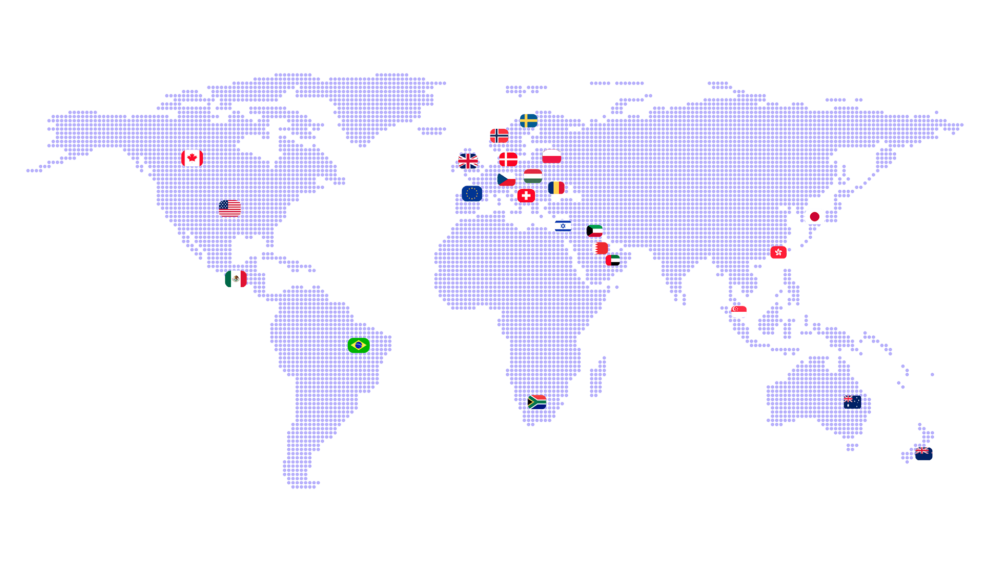
Global currencies and payment symbols displayed

Key benefits

Run your business

Manage your payments, settle trades and pay OPEX

Virtual IBANs

Streamlining customer flow of funds to support your reconciliations

Manage flow

Manage your global flow through multi-currency accounts EUR, GBP and USD

Local payment rails

Access to local payment rails in key geographies including GBP, EUR, USD, AUD and CHF

International reach

Send and receive funds globally through the SWIFT network

TMS connectivity

Receive daily ISO 20022 statement files to feed into your Treasury Management System

Scroll

Global currency reach

We cover the top global currencies: US Dollar (USD), British Pounds (GBP), Euro (EUR) and Japanese Yen (JPY).

We also cover many key regional currencies. For Europe, we offer Czech Koruna (CZK), Danish Krone (DKK), Hungarian Forint (HUF), Romanian Leu (RON), Polish Zloty (PLN) Norwegian Krone (NOK), and Swedish Krona (SEK). We also cover the Canadian Dollar (CAD) and Mexican Peso (MXN) in the Americas.

We offer strong coverage in the Middle East and Africa with the Bahraini Dinar (BHD), Israeli Shekel (ILS), Kuwaiti Dinar (KWD), South African Rand (ZAR) and UAE Dirham (AED). And for Asia, we offer the key regional currencies of Australian Dollar (AUD), Hong Kong Dollar (HKD), New Zealand Dollar (NZD) and Singapore Dollar (SGD).

Access currency accounts

Contact us

To learn more about how BCB Group payment accounts can streamline your organisation’s finances, contact one of our expert team.

They will be able to help with your payment needs, from currency options to payment rails, and explain how a BCB account can be integrated with your business.

Get started

FAQs

  • What are payment accounts?
    Payment accounts are multi-currency business accounts designed to support global payment operations across fiat and digital asset markets. These accounts, often provided by exchanges or specialised platforms, enable instant payments, cross-border transfers, and, via stablecoins, act as digital, fiat-pegged money.

    At BCB Group, our payment accounts enable companies to manage customer payments, settle trades and handle operating expenses, while connecting to major payment rails and supporting international fund flows within a single, integrated and regulated infrastructure.
  • How do payment accounts support cross-border payments?
    Payment accounts support cross-border payments by bypassing traditional, slow banking networks (SWIFT) in favour of connecting businesses to major international payment rails and enabling multi-currency fund flows within a single infrastructure. This allows clients to move funds between jurisdictions efficiently, reducing reliance on fragmented banking networks and supporting faster, more transparent global transactions.
  • Which payment rails do BCB payment accounts connect to?
    BCB payment accounts connect to major global, regional and local payment rails, enabling flexible movement of funds across jurisdictions and currencies. All currencies can be moved via the SWIFT network.

    Payments in Sterling are available through Faster Payments, CHAPS and SWIFT, while euro payments can be made through SEPA Instant, SEPA, T2 and SWIFT and US Dollar payments via Fedwire and International Wire.
  • Are these suitable for crypto and digital asset businesses?
    Yes. BCB payment accounts are designed specifically to support businesses operating in crypto and digital asset markets. They provide the fiat infrastructure needed to manage client flows, settle trades and handle day-to-day payments, while connecting directly to relevant payment rails.

    Because BCB payment accounts are built to integrate with digital asset workflows, network users are able to move between fiat and crypto environments more speedily and efficiently across multiple currencies.
  • Is this the same as a crypto bank account?
    No. BCB payment accounts are fiat payment accounts rather than traditional bank accounts or crypto custody solutions. While they are designed to integrate with digital asset workflows, their primary function is to support fiat payment activity within a regulated environment.
  • What is the difference between payment accounts and BLINC instant payments?
    The difference is in speed, certainty and efficiency. Most payment accounts are designed for holding funds and processing payments across domestic and cross-border networks, where settlement times and cut-off windows still apply.

    BLINC, however, enables instant transfers between participants on its closed-loop network, fee-free across multiple fiat and digital currencies. Payments are processed and settled immediately, 24/7 including weekends and bank holidays, without reliance on traditional banking hours or intermediaries.
  • How do payment accounts support multi-currency payment processing?
    Payment accounts allow clients to hold, send and receive funds in multiple fiat currencies within a single account structure. By connecting to relevant local and international payment rails, clients can move funds in the required currency and settle transactions more efficiently across different markets, removing the need for them to manage separate accounts for each currency. BCB’s BLINC allows for instant settlement across multiple currencies, including GBP, EUR, SGD, CHF, JPY, NZD, PLN and CAD.
  • Why do digital asset businesses need dedicated payment accounts?
    Digital asset businesses often have specific needs around speed, transparency and regulatory alignment that traditional banking infrastructure cannot always meet.

    Dedicated payment infrastructure such as BLINC provide reliable access to fiat rails, support integration with crypto workflows, and help ensure that payment activity can be managed consistently and transparently as part of a broader financial ecosystem. Within BCB’s framework, these accounts are designed to integrate directly with digital asset workflows, helping businesses move between fiat and crypto environments efficiently while maintaining compliance.