


BLINC magazine: building trust in crypto with financial soundness and regulation
Chizoba Uzowuru (Head of Safeguarding, BCB Group) and Valentin Vincendon (Chief Product Officer, BCB Group) discuss building long-term trust within the decentralised industry.
The crypto industry has evolved dramatically over the past 10-15 years. What began as a niche experiment is now a multi-trillion-dollar ecosystem attracting institutional investors and global banks at an extraordinary pace. According to recent reports, over 80% of major financial institutions are exploring blockchain-based solutions. Yet, despite this progress, some skepticism lingers—fuelled by high-profile scandals involving unscrupulous providers, bankruptcies due to poor management, and regulatory uncertainty.
For businesses operating in this space, building credibility and resilience is essential if institutional and retail adoption are to continue. Chizoba Uzowuru (Head of Safeguarding, BCB Group) and Valentin Vincendon (Chief Product Officer, BCB Group) discuss what makes a crypto firm financially sound, how regulation is evolving, and what it takes to build long-term trust in a fast-moving and unpredictable industry.
WHAT IS FINANCIAL SOUNDNESS AND WHY DOES IT MATTER?
Crypto’s reputation has been shaped by extremes—meteoric rises and sharp collapses. When exchanges fail or custodians mismanage assets, the consequences are immediate and severe. Unlike traditional finance, there’s no compensation scheme for investors to fall back on.
For institutional clients, financial soundness is much more than a checkbox. It’s the foundation on which trust is built. Sustainable liquidity, good governance, and transparency are critical. Without them, innovation becomes a liability rather than an advantage.
CRYPTO HAS ENTERED MAINSTREAM FINANCE, BUT SKEPTICISM PERSISTS. WHAT ARE THE FOUNDATIONS OF FINANCIAL SOUNDNESS IN THIS SECTOR?
Chizoba: In many ways, the fundamentals mirror traditional finance. Clients should look for liquidity − how easily can you withdraw funds? − and clarity on how assets are protected. Governance and culture matter too. Strong internal controls and transparency are essential.
The challenge in crypto is that information isn’t always readily available. That’s why firms need to demonstrate resilience through clear safeguarding measures and robust governance. Bad actors make headlines, so clients should pay attention to reputation and regulatory compliance.
Valentin: From a product perspective, the technology layer introduces unique considerations. Crypto runs on blockchain − a decentralised database −so mistakes aren’t easily forgiven. Firms need a tech stack designed for security, segregation of assets, and accurate reconciliation. Beyond technology, people matter. Teams must understand the nuances of crypto versus fiat systems. And while regulation is catching up, the pace of innovation means businesses often need to anticipate risks before rules are written.
Lessons from past failures
The collapse of FTX in 2022 was a watershed moment. It exposed gaps in governance and asset segregation, triggering a wave of scrutiny. In response, the industry introduced proof-of-reserves audits − an innovation that regulators hadn’t yet mandated.
This episode underscores a key point: sound practices often start with industry leadership, not regulation. Firms that wait for rules risk falling behind − or worse, failing altogether.
REGULATION IS OFTEN SEEN AS A MOVING TARGET IN CRYPTO. WHERE DO THINGS STAND IN THE UK AND EUROPE?
Chizoba: From a European perspective, MiCA is live. It sets standards for capital reserves, asset segregation, and record-keeping. These frameworks aim to provide assurance to clients. Unlike traditional investments, there’s no investor compensation scheme in crypto, so regulation is the foundation for trust.
Valentin: In the UK and around the world, regulation is a starting point, not the finish line. The most forward-thinking regulators engage with industry to learn and adapt. Sometimes the industry leads- take proof of reserves after the FTX
collapse. That was an industry-driven solution to a trust problem regulators hadn’t addressed yet.For global firms like BCB, compliance isn’t just about following local rules. It’s about anticipating future requirements and building products that meet the highest standards worldwide
WITH SO MUCH FOCUS ON TECHNOLOGY AND REGULATION, HOW IMPORTANT ARE SKILLS AND CULTURE IN CRYPTO FIRMS?
Chizoba: When I joined from an audit background, I saw how compliance talent was still catching up. That’s changing, but slowly. Building a culture of governance is as important as hiring the right engineers.
Valentin: Agreed. From a product perspective, understanding partners’ business models is critical. In crypto, you might work with entities that aren’t even traditional organisations − like DAOs. So we dig deep into how they manage risk, flows, and compliance.
HOW DOES BCB GROUP STAY AHEAD OF REGULATORY CHANGE AND DEMONSTRATE CREDIBILITY?
Chizoba: We take a proactive approach. We engage with regulators, attend industry forums, and consult external experts. Internally, we challenge assumptions through governance forums and scenario planning. When new rules are on the horizon, we map out what needs to change, what can stay, and what requires enhancement. Transparency with regulators is key- we keep communication open and document our processes. Partner due diligence is another priority. We assess financial health, operational practices, and even media reports. It’s not a one-and-done exercise; monitoring is continuous. In crypto, there’s no safety net, so we have to be meticulous.
Valentin: Regulation can feel constraining, but it also provides a framework. It defines the playing field, which helps us innovate responsibly. For us, governance isn’t a box-ticking exercise − it’s embedded in how we build and scale.
DOES THE INDUSTRY AS A WHOLE MEET THESE STANDARDS, OR IS THERE ROOM FOR IMPROVEMENT?
Valentin: Standards have improved significantly, but there’s always room to grow. Doing the right thing with a tier-one regulator is very different from doing it with a little-known authority. For B2B players, the stakes are higher − word of mouth is critical, and mistakes aren’t tolerated. Retail-focused firms often move faster and take more risks, which can lead to problems. For institutional players like BCB, credibilityis everything. We can’t afford regulatory arbitrage or shortcuts.
Chizoba: I agree. Compliance talent is still catching up with industry growth. As more professionals transition from audit and traditional finance into crypto, we’ll see stronger processes and governance. Regulators are evolving too, which will raise standards across the board.
IF YOU HAD TO GIVE ONE PIECE OF ADVICE TO A CRYPTO FIRM SEEKING LONG-TERM CREDIBILITY, WHAT WOULD IT BE?
Valentin: Trust isn’t built overnight. You can’t improvise credibility − it comes from a consistent track record of doing the right thing. Every decision matters: choosing the right partners, building secure technology, and sometimes saying no to clients who don’t align with your standards. In an industry this new, no one has centuries of trust like JP Morgan. But you can compound trust over time by making integrity your default.
Chizoba: Don’t shy away from adopting best practices from traditional finance. Governance, external reviews, and strong controls add credibility. Digital assets were created to challenge old systems, but consumer protection and sound conduct should never be optional.
FUTURE OUTLOOK: WHAT’S NEXT FOR CRYPTO REGULATION?
Valentin: Expect more harmonisation globally. Right now, rules vary widely between jurisdictions, which creates complexity for firms operating internationally. Over time, expect convergence on core principles like safeguarding, capital adequacy, and transparency. Technology will also play a bigger role in compliance. Automated reporting, real-time audits, and blockchain-based proofs could make regulatory oversight more efficient and less intrusive.
Chizoba: Agreed. Regulation will continue to evolve, but firms shouldn’t wait for the next rulebook. Building a culture of compliance and resilience is the best way to future-proof your business. Ultimately, regulation exists to protect clients − and that’s good for everyone.
CLOSING THOUGHTS
Crypto is still in its early days, and that’s exciting. Regulation and innovation will continue to shape the success of the industry, but the fundamentals — trust, transparency, and resilience—will always remain the same.
As Valentin puts it: “Every day still feels like day one.” For firms willing to invest in governance and credibility, the future will reward them.

Related Insights

BLINC magazine: crypto compliance across global and local rules
READ
BLINC magazine: keeping crypto in safe hands
READ
BLINC magazine: the end of crypto experiments
READ
BLINC mag content: the future of crypto settlement
READ
The two-sided future of remittances
READ
How BLINC transforms speed, liquidity and cost efficiency for global remittance providers
READ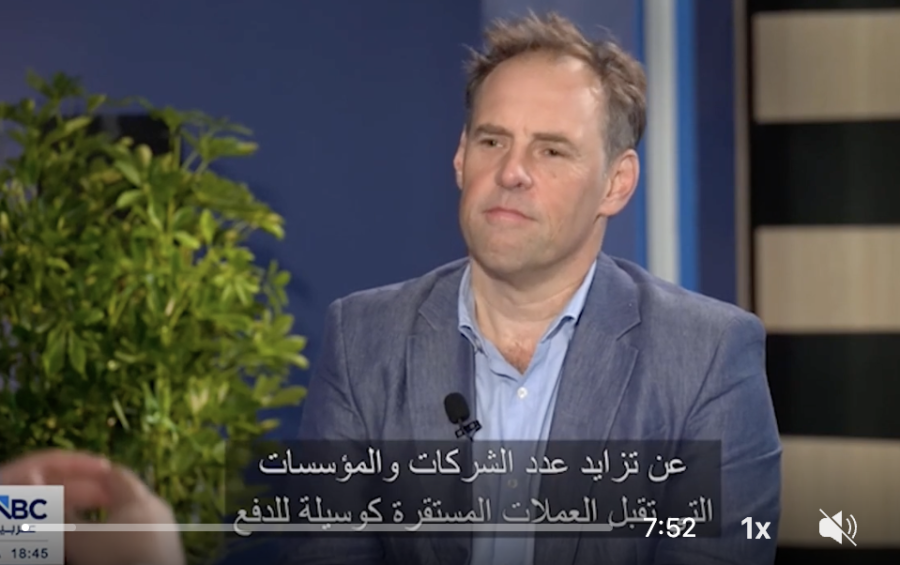
CNBC Interview with Oliver Tonkin, BCB Group’s Co-founder and President
READ