


BLINC magazine: crypto compliance across global and local rules
As the institutionalisation of crypto continues and the market matures, firms operating in multiple jurisdictions are facing an increasingly complex regulatory landscape.
As the institutionalisation of crypto continues and the market matures, firms operating in multiple jurisdictions are facing an increasingly complex regulatory landscape. In late November, Co-Founder and President of BCB Group Oliver Tonkin joined a panel at City & Financial Global’s full-day event examining crypto asset and stablecoin regulatory regimes.
The panel, moderated by George Morris, Partner at law firm Simmons & Simmons, representatives of the industry shared their views and discussed how the UK’s new cryptoasset regulatory regime could compete in the global market − and what firms must do to adapt. Other panellists were Stephan Dreyer, Managing Director at Association of National Numbering Agencies (ANNA); and Azariah Nukajam, Head of Regulation and Compliance (UK) at Gemini.
What is the main challenge facing these firms
According to Morris: having to grapple with multiple regulations. Because most crypto firms operate internationally, they need to meet regulatory requirements across different regimes. This is challenging because of the unique skillsets and resources required to interpret different regimes, especially as they evolve.
Morris elaborated that the absence of standardisation and harmonisation means firms face the impossible task of running ‘a million different regulated businesses’ all at once, which can be very costly.
The overarching theme of the conversation was how these firms can operate efficiently when each jurisdiction is implementing different rules − and can new global standards help bridge any regulatory gaps?
Why global standards are important
Dreyer emphasised that global standards will play a crucial role in reducing this regulatory fragmentation. He outlined how a ‘solution package’ could help crypto firms meet their compliance and reporting requirements consistently across different jurisdictions.
His association, which comprises 123 global members that are promoting the adoption and implementation of ISO standards across capital markets, has been focusing on how these standards can be applied to crypto assets. As crypto assets increasingly resemble traditional instruments in their form and function, ANNA has been exploring how these established classifications can be applied to digital tokens.
It is already collaborating with The Digital Token Identifier (DTI) Foundation and The Global Legal Entity Identifier Foundation (GLEIF), with a goal to expand the globally recognised CFI (Classification of Financial Instruments) standards to the crypto market.
“The success of the UK will largely be impacted by the interoperability of its prospective regime. It should recognise the international nature of the crypto market rather than seek to impose purely domestic constraints.”
Dreyer explained that this “solution package” can help firms streamline their compliance, improve reporting accuracy – providing them with the clarity and stability they need in a fast-moving market.
The UK’s new regime plan
Moving onto the UK’s new proposed regulatory regime, Nukajam said the success of the UK will largely be impacted by the interoperability of its prospective regime. This regime, she argued, should recognise the international nature of the crypto market rather than seek to impose purely domestic constraints.
“There is a need for the UK to remain a global hub and to retain access to liquidity,” she said, interpreting the Financial Conduct Authority (FCA)’s plans as ‘broadly the right approach’ and ‘well intended’. However, she stressed that the devil will be in the detail, and there are still many questions around the implementation of some of these rules.
She highlighted two key supervisory tools that the FCA is expecting to rely on. The first is the location of the firm and whether it is operating within the UK, and if so, whether this is through a branch or a subsidiary. The second is the type of customer being served. Overseas firms that cater to professional clients may face more relaxed requirements, while those servicing retail users would require UK authorisation. Under the branch model, key functions such as execution and settlement could remain supervised by the firm’s home regulator, while UK authorities focus on maintaining market integrity and consumer protection.
Whether overseas platforms choose to enter or remain in the UK may ultimately depend on how costly it will be to meet these requirements and the degree to which they align with other regimes. Oliver Tonkin said that because BCB Group’s core business is already regulated in markets such as France (under MiCA) and Switzerland, he is very familiar with how fragmented global
regulations work in practice.
Stablecoins are a prime example
Unlike traditional fiat currencies −where a dollar is a dollar − stablecoinsvary depending on the jurisdiction.
“For example, USDC issued under MiCA rules in France is not the same as USDC issued in New York”, he said. This is an operational headache for cross-border payment flows, settlements and compliance.
However, Tonkin pointed to some encouraging early signals that non GBP stablecoins appear to be more flexible and pragmatic, which could help investors avoid the complexities that are emerging in the EU. Unlike the dual-issuer model emerging in the EU, the UK’s approach may allow for smoother cross-border movement of institutional capital.
For crypto providers, this could make the UK a potentially more attractive environment, depending on the final rules.
Regulation alone cannot solve crypto’s challenges
The big takeaway from this panel discussion is that regulation can only succeed if there are global standards that can bridge the gaps between different regimes. Furthermore, individual regulators must ensure their regimes are appropriate for the cross-border structure of the crypto ecosystem and support the ongoing institutionalisation of the market.
As the UK prepares to implement its new regime while other jurisdictions refine their own, the key question isn’t about how crypto is regulated − but whether these rules will facilitate long-term growth rather than impede it.
Read the full issue here

Related Insights

BLINC magazine: keeping crypto in safe hands
READ
BLINC magazine: the end of crypto experiments
READ
BLINC magazine: building trust in crypto with financial soundness and regulation
READ
BLINC mag content: the future of crypto settlement
READ
The two-sided future of remittances
READ
How BLINC transforms speed, liquidity and cost efficiency for global remittance providers
READ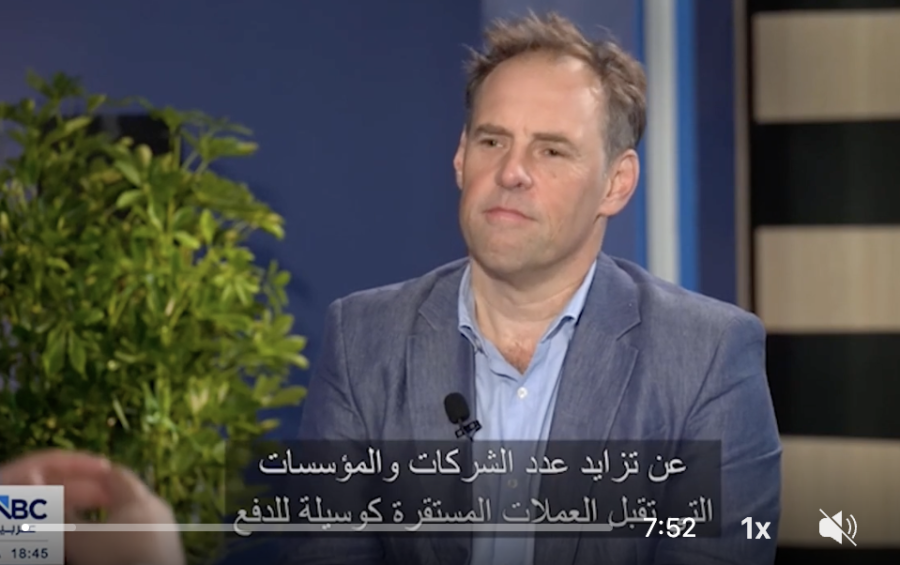
CNBC Interview with Oliver Tonkin, BCB Group’s Co-founder and President
READ