
Why Remittance Firms Are Embracing BLINC
The remittance industry has always depended on the efficient movement of capital. That challenge is becoming more complex as providers expand into new corridors and support more currencies, in a digital-first world where customers expect funds to move quickly, regardless of time zone or banking hours.
While many firms have invested heavily in customer experience and distribution, legacy settlement and liquidity infrastructure often stay fragmented. This ‘too many cooks’ approach can create operational inefficiencies that become more noticeable the more a business attempts to scale upwards.
The cost of fragmented liquidity
Traditional payments rails were not designed for 24/7 global markets. Funds are often distributed across different accounts, jurisdictions and providers to support settlement obligations in multiple markets.
However, for remittance providers this means slower capital cycles, reduced visibility and higher costs. As they continue to expand internationally, delayed settlement adds not only cost but operational friction.
Banking cut-off times, batch processing cycles and reliance on intermediary institutions slows the movement of funds, in turn affecting control over available liquidity. Firms are often forced to maintain larger balances than they would ideally like, tying up working capital left idle in prefunding accounts.
It leads to a fragmented landscape, crying out for a single solution that can reliably and cost-effectively address the demands of efficiency, growth and scalability.
BLINC: the solution for real-time settlement
This is why BLINC, BCB Group’s instant payments and settlement network, is such a compelling solution for institutions looking for modern payment flows.
Through BLINC, clients can move funds in real time, fee-free, 24 hours a day, 365 days a year between trusted counterparties within the closed-loop network.
For remittance companies that depend on fast liquidity redeployment and predictable settlement timing, BLINC’s always-on infrastructure gives them greater control over liquidity and reduces reliance on traditional settlement windows.
BLINC’s value extends beyond speed. Real-time movement of funds allows liquidity to be redeployed more efficiently across entities, accounts and regions. Treasury teams gain greater certainty over cash positions and can respond more quickly to changing funding requirements.
The benefits are clear: an agile operating model that eliminates delays, cut-off times and costs associated with legacy systems, and supports high-volume remittance flows with lower transaction costs.
Infrastructure built for scale
As remittance firms enter new markets, regulatory expectations continue to evolve, and operational requirements become more demanding. BLINC operates within the broader regulation-first framework of BCB Group, authorised by tier one regulators in the UK, France and Switzerland.
Because BLINC is built on multi-jurisdictional partnerships as opposed to a single banking model, it creates a foundation that supports long-term expansion rather than solving a single operational challenge – particularly in markets that are hard to reach for traditional payments infrastructure.
For remittance providers focused on sustainable growth, infrastructure that supports resilience and governance alongside settlement capabilities is increasingly a competitive differentiator.
BLINC allows clients to move liquidity efficiently, settle funds predictably and maintain operational control across multiple markets. It provides the infrastructure needed to support modern remittance operations while creating greater efficiency, resilience and scalability for the future.
Ready to move funds in real time, fee-free, 24/7? Get in touch with our team, to explore how BLINC can support your settlement infrastructure.

Related Insights
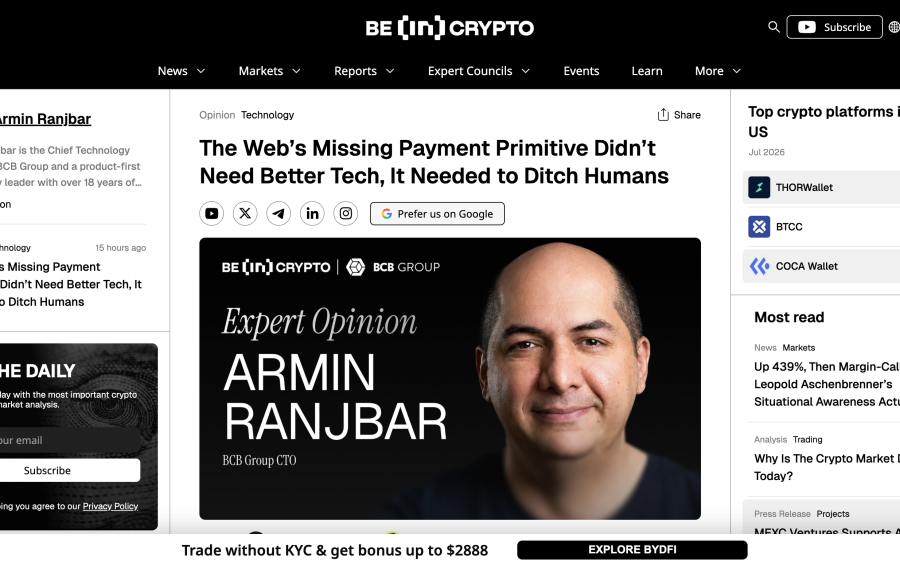
Beyond the Hype: Why x402 and Agentic Commerce Fix the 30-Year Micropayment Problem
READ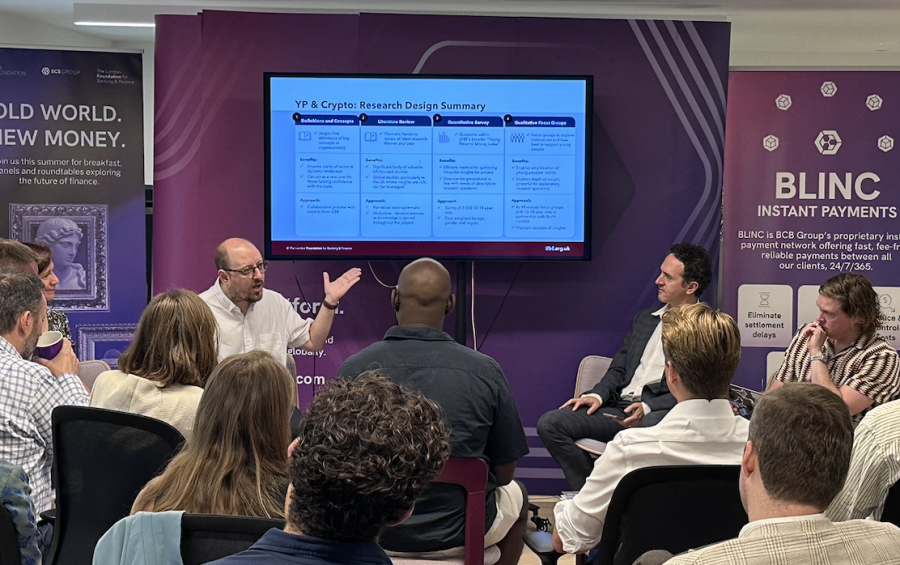
From awareness to understanding: unpacking Key Themes in Financial Capability: Young People and Cryptocurrency
READ
BCB Group CTO Armin Ranjbar on finding the right unit of progress
READ
Young People and Cryptocurrency: What the Next Generation Really Thinks About Digital Finance
READ
What is IBAN discrimination and why does it still matter in Europe?
READ
What are agentic payments and why do they matter?
READ
BCB Group is shortlisted for four awards at the Women in Tech Employer Awards 2026
READ