
BCB Group on the importance of remittances within the financial ecosystem
Camille Tas, Head of Sales at BCB Group, speaks on the evolving role and importance of remittances within the financial ecosystem.
The remittance industry has always depended on the efficient movement of capital. However, that challenge is becoming significantly more complex as providers expand into new corridors and support more currencies. In a digital-first world, customers expect funds to move instantly, regardless of time zones or traditional banking hours.
While many cross-border firms have invested heavily in front-end user experience and global distribution networks, back-end settlement and liquidity infrastructure frequently remain fragmented. Relying on slow, legacy intermediary networks often introduces operational inefficiencies that cap your growth exactly when you are attempting to scale upward.
The True Cost of Fragmented Liquidity
Traditional payment rails were simply not built for 24/7 global markets. To meet local settlement obligations across multiple international corridors, remittance providers are often forced to distribute capital across an array of isolated regional accounts and intermediary institutions.For treasury and operations teams, this setup results in:
- Slower Capital Cycles: Funds are bottlenecked by standard banking cut-off times and multi-day batch processing cycles.
- Reduced Visibility: Managing fragmented accounts limits real-time oversight of actual cash positions.
- Trapped Capital: Firms must maintain bloated balances to handle prefunding requirements, leaving vital working capital completely idle.
BLINC: Real-Time Settlement Built for Scale
To eliminate this operational drag, forward-thinking institutions are migrating to BLINC—BCB Group’s instant payments and settlement network.
BLINC provides an always-on, closed-loop clearing infrastructure that allows clients to route funds in real time, completely fee-free, 24/7/365 between trusted network participants. By bypassing traditional banking windows, treasury teams gain complete certainty over settlement timing and can instantly redeploy liquidity across accounts, entities, and regions as funding demands shift.
Furthermore, BLINC operates within a regulation-first framework authorised by tier-one regulators in the UK, France, and Switzerland. Because it is built on robust multi-jurisdictional partnerships rather than a single, restrictive banking model, it serves as a resilient, long-term foundation for sustainable global expansion.

Related Insights

Virtual IBANs for global payment operations
READ
How Banks Are Navigating the Correspondent Banking Transition in 2026
READ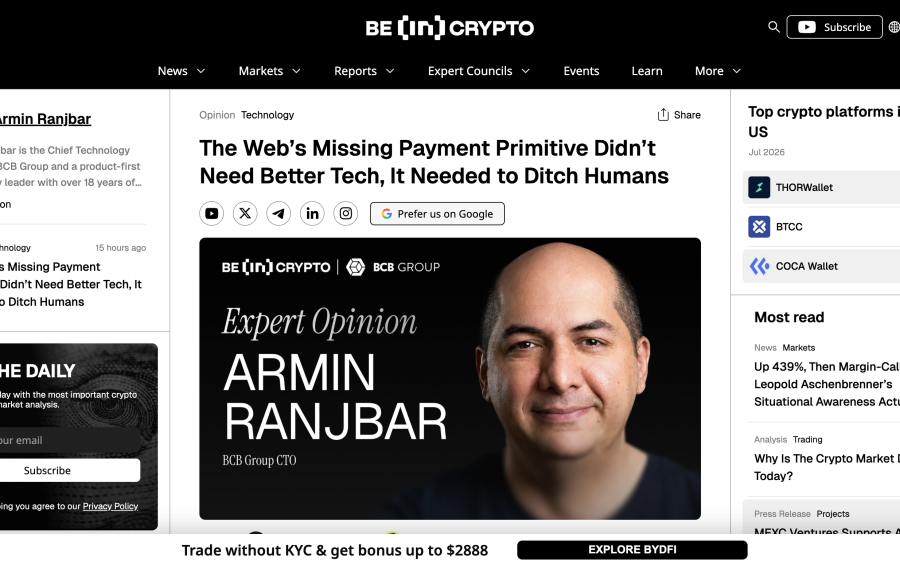
Beyond the Hype: Why x402 and Agentic Commerce Fix the 30-Year Micropayment Problem
READ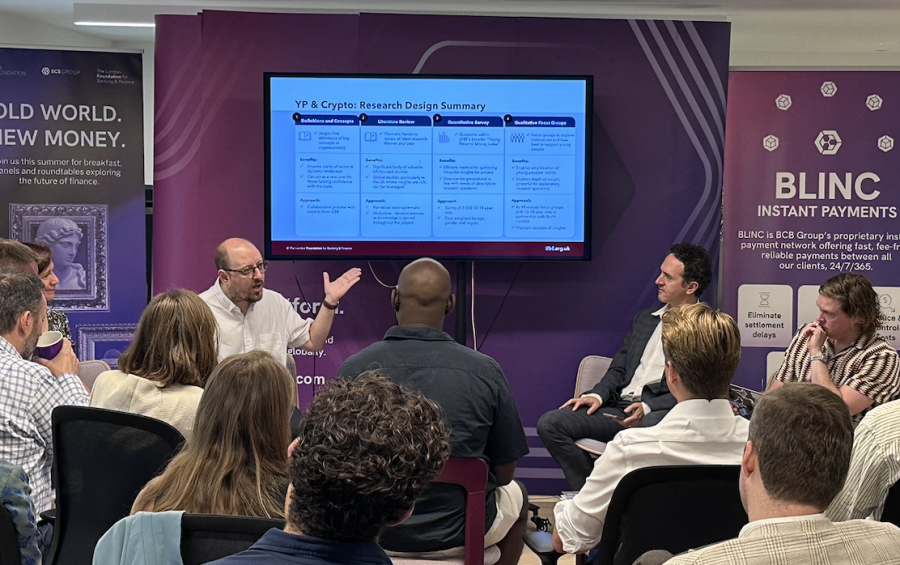
From awareness to understanding: unpacking Key Themes in Financial Capability: Young People and Cryptocurrency
READ
BCB Group CTO Armin Ranjbar on finding the right unit of progress
READ
Young People and Cryptocurrency: What the Next Generation Really Thinks About Digital Finance
READ
What is IBAN discrimination and why does it still matter in Europe?
READ