
Use cases for remittance providers
Use Case 1:
Expanding into a new payment corridor.
The challenge.
New payment corridors create attractive commercial opportunities, but they also add operational demands. Entering a new market often means establishing additional banking relationships, arranging settlement infrastructure, managing liquidity in more currencies and meeting new regulatory requirements. As expansion gathers pace, so do the moving parts that treasury and operations teams need to manage.
Current approach.
Many remittance providers expand by extending the infrastructure they already have in place. This helps maintain continuity for customers and avoids unnecessary disruption. However, as the number of corridors grows, settlement activity can become increasingly fragmented across multiple partners, processes and accounts, making operations harder to scale efficiently.
The solution.
Many firms are taking a phased approach to modernisation, enhancing existing operating models rather than overhauling them. By introducing more streamlined settlement capabilities and improving access to liquidity information, organisations can reduce operational friction while continuing to expand into new markets.
The outcome.
A more scalable operating model that allows firms to enter new corridors with greater confidence. Treasury and operations teams spend less time managing complexity behind the scenes, while the business remains well positioned to pursue growth opportunities without disrupting existing services.

Use Case 2:
Managing liquidity across multiple currencies.
The challenge.
As remittance providers expand internationally, keeping track of liquidity across multiple currencies, accounts and markets becomes increasingly demanding. This is when treasury teams can benefit from gaining a clearer overview of all their funding requirements, payment flows and settlement positions to make proactive decisions and manage resources efficiently.
The current approach.
To ensure settlement obligations are met consistently, many organisations have no choice but to maintain fairly substantial liquidity buffers across various accounts. While this approach can provide reassurance, it may also leave capital tied up unnecessarily, reducing the funds available for investment, product development or expansion initiatives.
The solution.
When treasury teams have a complete, up-to-date overview of their liquidity positions, decision-making can shift from being reactive to proactive. Capital can be allocated where it is genuinely needed rather than held as a precaution. During periods of market volatility, the ability to see developing conditions early also helps organisations plan with greater confidence and control.
The outcome.
Treasury shifts from a primarily operational function to a more strategic contributor. Improved liquidity management can enhance working capital efficiency, help release capital for higher-value priorities and strengthen the organisation’s ability to respond to changing market conditions.

Use Case 3:
Transforming payment visibility into better business decisions.
The challenge.
Growth brings opportunity, but it can also make payment operations more difficult to oversee. As remittance providers expand across new markets and corridors, treasury teams need more than basic payment status updates. They require a complete picture of settlement activity, incoming funds and liquidity positions to make informed decisions throughout the day.
The current approach.
Many organisations rely on information from multiple banks, payment providers and internal platforms to understand activity across their payment ecosystem. These processes are often built over many years and may continue to serve the business reasonably well, even if some operational workarounds are required. At larger volumes, however, bringing everything together into a single, consistent view can become increasingly challenging.
The solution.
Greater transparency across the payment lifecycle creates value well beyond operational reporting. Treasury teams can forecast liquidity with greater accuracy, operations teams can identify and resolve issues more quickly, and commercial leaders gain a clearer understanding of payment trends across the business. The result is a stronger foundation for both day-to-day decisions and longer-term planning.
The outcome.
Better information leads to better decisions. Organisations can improve operational efficiency, strengthen liquidity management and respond more effectively to changing business conditions, all while building a more connected and resilient payments environment.

Use Case 4:
Beyond speed: turning predictability into a competitive advantage.
The challenge.
Price, speed and corridor coverage have long been important competitive differentiators in the remittance industry. Yet as operating environments become more complex and market conditions less predictable, reliability is becoming just as valuable. Organisations increasingly need confidence that payment and settlement processes will perform as expected, even when conditions are far from straightforward.
The current approach.
Many firms address uncertainty through added controls, manual oversight and higher liquidity buffers. These measures can help reduce risk exposure, but they may also introduce additional operational burden and make it harder to remain agile as the business grows.
The solution.
Predictable infrastructure provides a stronger platform for decision-making. When payment flows, settlement outcomes and liquidity positions are more consistent and easier to monitor, treasury and operations teams can focus less on managing exceptions and more on supporting the wider business. That confidence extends beyond operational teams and into strategic decision-making.
The outcome.
Predictability becomes a commercial asset in its own right. Organisations benefit from greater operational confidence, stronger customer trust and a more dependable foundation for growth, whether that involves entering new markets, launching new services or responding to changing customer demand.
Ready to speak to us to find out how we can help you reach these outcomes? Contact us today.

Related Insights

BLINC Adoption Roadmap for Treasury Teams
READ
How Banks Are Navigating the Correspondent Banking Transition in 2026
READ
Beyond the Hype: Why x402 and Agentic Commerce Fix the 30-Year Micropayment Problem
READ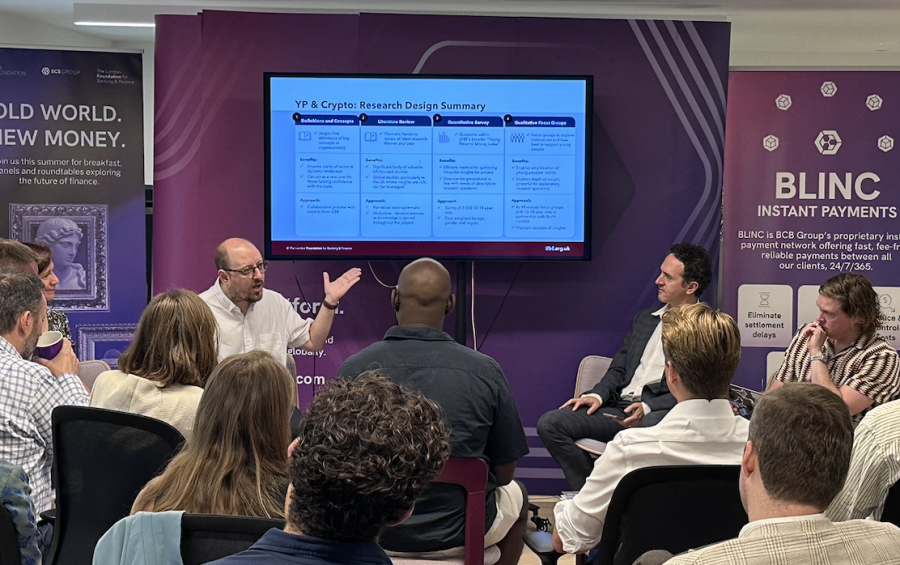
From awareness to understanding: unpacking Key Themes in Financial Capability: Young People and Cryptocurrency
READ
BCB Group CTO Armin Ranjbar on finding the right unit of progress
READ
Young People and Cryptocurrency: What the Next Generation Really Thinks About Digital Finance
READ
What is IBAN discrimination and why does it still matter in Europe?
READ