
How modern settlement infrastructure helped BLINC gain dominance
For many years, remittance providers have competed on three key factors: price, speed and corridor coverage. While these are still obviously important, they are no longer the only considerations for firms looking to scale internationally. As transaction volumes increase and payment operations become more complex, the quality of an institution’s settlement infrastructure is is becoming one of the biggest competitive differentiators for firms looking to scale internationally.
BLINC has emerged as one of the leading examples of this shift
Rather than simply providing another way to move money around, it has evolved into an expanding institutional settlement network whose value continues to increase as more participants join. This article explores why network effects matter, how BLINC has developed over time, and why an increasing number of remittance providers are choosing network-based settlement.
The power of the network effect
This is when the value of a service increases as the number of people using it also increases. For BLINC, every new institutional participant joining the network expands the number of potential relationships available to every other participant. As adoption grows, participants benefit from more connectivity, more settlement opportunities and greater liquidity flexibility. The result is that the network becomes increasingly valuable for both existing and new participants.
Why traditional settlement infrastructure can constrain growth
-
Long settlement times
Because traditional remittance models require multiple intermediaries and have to work around fixed settlement windows, it can be harder to move funds efficiently. When remittance providers are scaling internationally, these delays create additional complexity, making it harder for treasury teams to optimise cash flow and meet customer expectations.
-
Fragmented liquidity
Legacy settlement models are often reliant on multiple banking partners, currencies and jurisdictions for cross-border payments. This can significantly reduce the availability of liquidity across different payment corridors, tying up working capital that could otherwise be deployed more effectively.
-
Reliance on correspondent banking networks
Although correspondent banking remains an important part of global payments, remittance providers that rely on a large number of these relationships can also face greater administrative demands, from strict cut-off times to additional settlement steps. As firms enter new markets, these challenges can become even more pronounced, making it harder to maintain predictable payment flows and consistent settlement.
Why network-based settlement is gaining traction
As remittance providers expand internationally, many are beginning to reassess whether their infrastructure is fit for their current needs and growth objectives. Rather than relying on an increasing number of bilateral banking relationships, network-based settlement enables institutions to connect to a growing ecosystem through a single network. As participation grows, so too does the number of potential settlement relationships, creating greater connectivity, improved liquidity flexibility and more efficient treasury management.
This helps explain why network-based settlement is becoming increasingly attractive for institutions looking to support long-term growth in an always-on payments environment.
How modern settlement infrastructure enabled BLINC’s growth
Settlement infrastructure was traditionally viewed as an operational requirement rather than a competitive advantage. However, this is beginning to change. As more remittance providers expand globally and transaction volumes continue to increase, the performance of the underlying network is becoming a much bigger strategic consideration.
This is where the network effect becomes visible. Unlike traditional payment relationships, a network creates more value for its participants as adoption grows. Every new institution joining the network increases the number of potential relationships available to every existing participant. This creates more connectivity, more settlement opportunities and greater liquidity flexibility – which can be particularly valuable during periods of market volatility, when treasury teams depend on the ability to deploy liquidity quickly.
This is why BLINC has evolved beyond a simple payment capability into an increasingly valuable institutional settlement network whose value continues to grow as its ecosystem expands.
Why more remittance providers are embracing BLINC
As remittance providers expand across new markets, settlement needs to support increasingly complex payment flows without creating unnecessary overhead. Faster settlement remains important, but many institutions are now looking for predictability, better liquidity management and greater efficiency. Together, these capabilities help treasury teams deploy capital more effectively, simplify reconciliation and support international growth without continually adding new settlement processes or banking relationships.
Why reliability matters as much as speed
For today’s cross-border payments, speed alone is rarely enough. Customers and counterparties expect payments to settle consistently, while institutions need confidence that their network can perform effectively as transaction volumes increase. That predictability helps build the trust required to support long-term commercial relationships.
By combining real-time settlement with a reliable and scalable operating model, BLINC helps institutions reduce friction while supporting the resilience and continuity needed for long-term growth.
The future of settlement networks
As cross-border payments become increasingly global and always on, the role of modern settlement networks is likely to continue evolving. The G20 roadmap for enhancing cross-border payments identifies faster, cheaper and more transparent settlement as key priorities for the future of global payments.
Institutions will require greater visibility over liquidity, more flexible ways to move capital and networks capable of supporting an increasingly interconnected payments ecosystem. In this environment, the value of these networks will go beyond the ability to move funds quickly. Their ability to connect institutions, improve liquidity efficiency and support seamless cross-border payments will become an increasingly important competitive advantage.
The success of a settlement network is not determined solely by how quickly it moves funds, but by the value it creates for the institutions connected to it. As more remittance providers join BLINC, the network continues to expand its connectivity, settlement opportunities and liquidity flexibility, making participation increasingly valuable for both new and existing members.
As cross-border payments continue to evolve, settlement networks are likely to become an even more important source of competitive advantage. Built on resilient settlement infrastructure, these networks help institutions improve liquidity, expand connectivity and support international growth. For remittance providers looking to scale internationally, the strength of the network operating behind every transaction may prove just as important as the speed of the payment itself.
How resilient is your remittance infrastructure?
This article has explored why modern settlement infrastructure is becoming a competitive advantage. Now see how your own infrastructure compares.
Take BCB’s remittance infrastructure scorecard to assess your approach to settlement, liquidity, treasury operations and international growth.


Related Insights

BLINC Adoption Roadmap for Treasury Teams
READ
How Banks Are Navigating the Correspondent Banking Transition in 2026
READ
Beyond the Hype: Why x402 and Agentic Commerce Fix the 30-Year Micropayment Problem
READ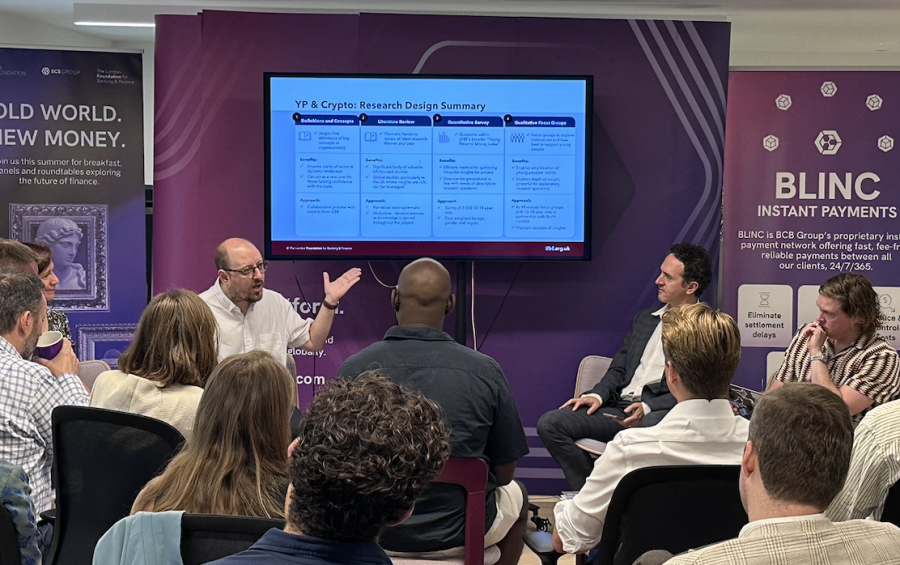
From awareness to understanding: unpacking Key Themes in Financial Capability: Young People and Cryptocurrency
READ
BCB Group CTO Armin Ranjbar on finding the right unit of progress
READ
Young People and Cryptocurrency: What the Next Generation Really Thinks About Digital Finance
READ
What is IBAN discrimination and why does it still matter in Europe?
READ